How to Plan Office Catering in London for Meetings, Team Lunches and Work Events

Office food has a bigger job than people often realise. A good breakfast spread can make an early meeting feel less painful. A thoughtful lunch can turn a long training day into something people actually enjoy. A few well-timed canapés can soften the edges of a client reception and help conversations start more naturally.
That is why office catering should not be treated as an afterthought. In London, where teams may be rushing between Tube stops, client meetings, shared workspaces and evening events, the right food can make a work gathering feel organised, generous and human.
This guide explains how to plan catering for office lunches, breakfast meetings, networking events, team celebrations and client receptions – covering what to order, how to choose a format, how to handle dietary requirements and when a professional caterer makes sense.
Start with the Event, Not the Menu
The simplest mistake in office catering is choosing food before understanding the event. A boardroom lunch, training day, company celebration and client drinks reception all need different pacing, and food should support the room rather than interrupt it.
Before choosing a menu, think about what the event is supposed to do. A working lunch should keep people comfortable and focused. A client meeting should feel polished but not distracting. A team celebration should feel generous. A networking event should make conversation easier. A company-wide gathering should offer enough choice without creating long queues.
Once you know the purpose, the right format becomes much clearer.
What Catering Companies Do for Office Events
Catering companies help plan, prepare, deliver and serve food for workplace gatherings. Depending on the event, they may also assist with menus, dietary requirements, staff, drinks, equipment, setup and clear-down.
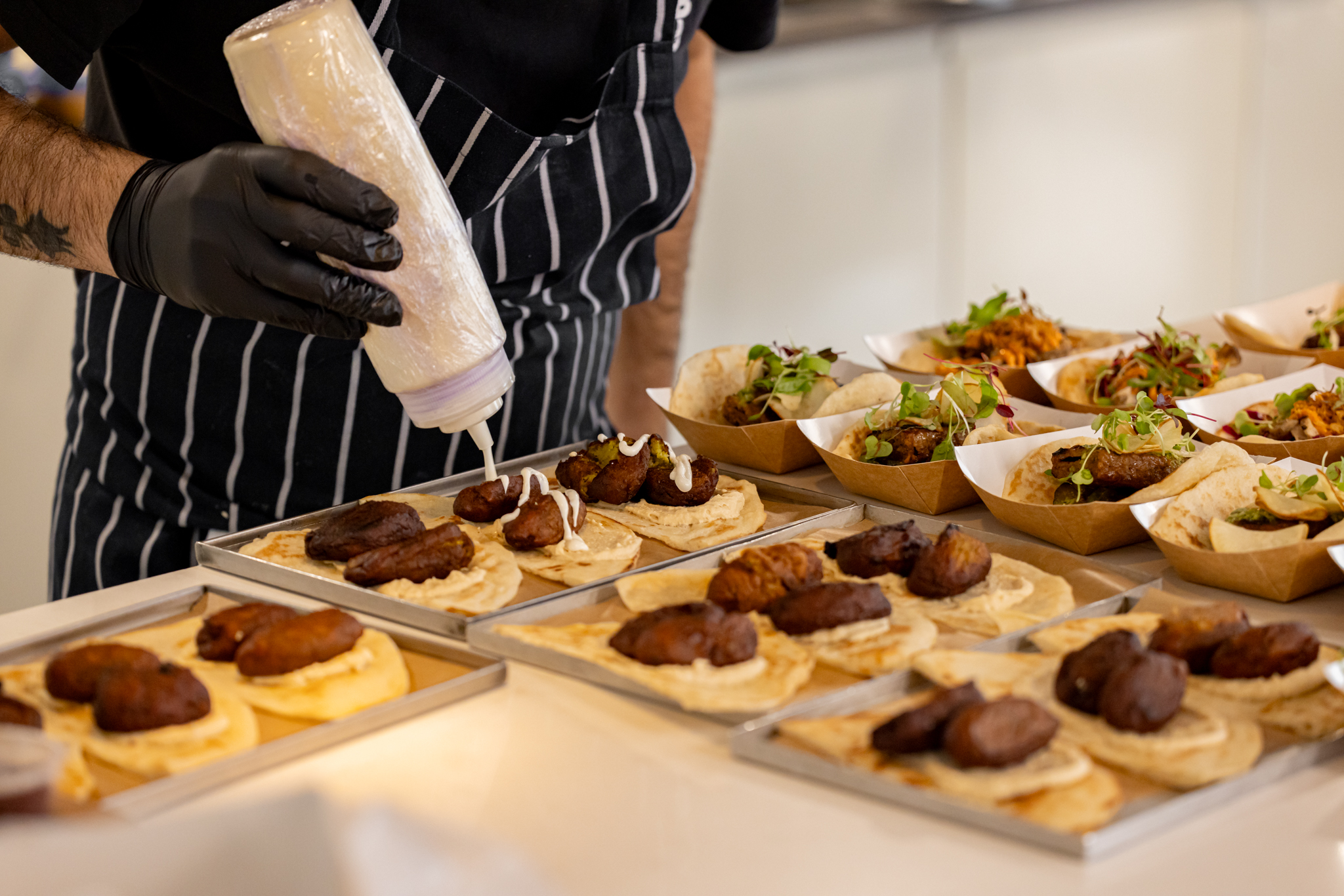
For a small team lunch, this might mean prepared platters delivered at the right time. For a boardroom meeting, it may involve quieter service and food that is easy to eat while people talk. For a product launch or client reception, it might include canapés, bowl food, drinks and a more polished service style.
The best caterers understand that office food has to be practical as well as enjoyable. It needs to arrive on time, look good, handle dietary needs and fit the energy of the day.
In London, logistics also matter significantly. A caterer may need to know about loading bays, lift access, reception desks, security check-ins, kitchen and fridge space, power access and delivery windows. The same applies to many UK office buildings, especially where access or parking can affect delivery and setup.
A good caterer will also ask about the people in the room. Are guests senior clients, a mixed team, new starters or international visitors? That context helps shape food that feels appropriate rather than generic.
How to Choose a Corporate Catering Company
Choosing the right workplace catering company is not only about who has the nicest menu. It is about who understands the purpose of your event and can deliver it reliably.
When comparing options, ask:
- Have they handled similar office or corporate events before?
- Can they work with your building's access rules?
- Do they offer vegetarian, vegan, gluten-free and allergy-aware options?
- Do they offer delivery only, staffed service or both?
- Are serving equipment, plates, napkins and cutlery included?
- How do they handle last-minute changes to guest numbers?
- Is VAT, delivery and staffing included in the quote?
Quotes are not always structured the same way. One may include staff, setup and equipment; another may only cover food. To compare fairly, ask each caterer to break down the same list of items: price per person, minimum spend, delivery, staffing, equipment, dietary options, setup, clear-down, VAT, cancellation terms and lead time.
A cheaper quote is not always better if it leaves your team handling the awkward parts. For office events, the hidden value is often in the calmness of the service. The right caterer should make the host feel less stressed, not more.
Breakfast Catering for Morning Meetings
Breakfast catering is a strong choice for early meetings, training sessions, boardroom presentations, team updates and client workshops. It sets the tone before the day has fully started.
The best breakfast menus are easy to eat, not too heavy and simple to serve – fresh pastries, fruit, yoghurt, breakfast wraps, savoury bites, coffee, tea and fresh juices. If you are looking for office breakfast catering ideas, focus on food that can be served quickly, eaten neatly and kept fresh throughout the meeting. For longer sessions, a mix of lighter and more filling options ensures guests are not hungry again by mid-morning.
In a London office, breakfast catering also needs to be punctual. A late delivery can disrupt the whole meeting. Always confirm building access, setup time and whether food should be individually boxed, laid out buffet-style or served by staff.
Office Buffet and Lunch Catering Ideas
For office lunches and team events, buffet service works best when it is planned around how people move through the room. It should help guests eat, talk and return to the event without long queues or confusion.
Good office catering ideas include mezze-style spreads, fresh salads, warm mains, sharing platters, bowl food, canapés and simple dessert tables. If you need catering ideas for office lunch, focus on variety: something filling, something fresh, something light, and dishes that are easy to serve in a workplace setting.
The best catering lunch ideas for the office are neat, balanced and easy to manage. Avoid food that is too messy, hard to portion or awkward to eat while standing. For larger teams, split stations can help people move faster; for smaller meetings, shared platters may be enough.
How to Set Up Regular Office Lunch Delivery
A regular office lunch works best when the decisions are made once and then left alone. Settle these five things before the first delivery:
- Headcount and budget per head, including what happens on days when fewer people are in
- A fixed delivery window, agreed with reception and security
- Building access: loading bay, lift, sign-in and where the food will be set up
- A standing split of vegetarian, vegan, gluten-free and halal portions, updated when the team changes
- A menu rotation, so the same order does not repeat every week
Review the order after the first month. Adjust quantities to what is actually eaten, and move the delivery time if food is arriving too early or too late. For regular office lunches in London, Le Bab delivers kebabs, mezze and sharing trays with 48 hours’ notice. See our office catering packages.
Drinks for Evening and Client Events
Drinks planning should match the event’s rhythm. A client reception, product launch, team celebration and evening networking event will each need a different level of service.
For a short reception, wine, beer, soft drinks and sparkling water may be enough. For a longer evening event, cocktails, welcome drinks or non-alcoholic options can help shape the atmosphere.
The important thing is coordination. Drinks should be easy to find, served at the right time and planned alongside the food so guests are not left waiting or moving awkwardly between separate stations.
Dietary Requirements: Planning Without Making Anyone Feel Singled Out
Dietary planning is one of the most important parts of office catering and one of the easiest to get wrong.
For UK workplaces, a good menu should include vegetarian, vegan and gluten-free options, plus clear allergen information where possible. But just as importantly, those options should feel like part of the meal, not an afterthought on the side. Guests should not have to ask awkwardly whether there is anything for them – they should be able to see that they have been considered.
For larger events, clear labels are especially helpful. For smaller meetings, confirming dietary needs ahead of time and ensuring the host knows which dishes suit which guests is usually enough.
How Much to Order
The right quantity depends on timing, event length, guest count and food style.
For a breakfast meeting, lighter portions may be enough unless the session runs for several hours. For lunch, people usually expect something more filling. For networking events, guests may eat less per person but expect food to appear steadily throughout. For evening events with drinks, slightly more substantial bites help keep the atmosphere comfortable.
It is also worth telling your caterer what guests will be doing before and after. If people are coming straight from work and staying into the evening, they will likely need more than a short drinks reception suggests.
Planning Checklist
Before confirming any office catering booking, check:
- Guest numbers and dietary requirements
- Event start and end time
- Delivery or setup window
- Building access, lift and loading bay
- Kitchen and fridge space available
- Food format and drinks requirements
- Staff requirements
- Equipment and tableware
- Waste and clear-down
- Budget and contact person on the day
This list may feel basic, but working through it prevents most of the problems that make office catering stressful.
When to Use a Professional Caterer
A professional caterer is worth using when the event matters enough that food, timing or presentation cannot be left to chance.
That might mean a boardroom lunch with an important client, a team event where you want people to feel genuinely appreciated, a product launch where every detail reflects the brand, or an evening reception where drinks, service and food all need to work together seamlessly.
For simple internal meetings with a small group, a basic delivery may be enough. But if the event involves guests, expectations, tight timings or dietary complexity, professional catering is usually worth the investment.
For menus and office food options, see Le Bab's corporate catering page. For broader event catering, visit the main catering services page. If you also need a space for the event, the events and venue hire page or private dining options may be a better starting point. To understand the food style before planning, the Soho menu is a good reference.
FAQs
What do catering companies do for office events?
They plan, prepare, deliver and often serve food for meetings, lunches, receptions and workplace celebrations. Many also provide drinks, staff, equipment and clear-down.
How do catering companies work with corporate clients?
They start by gathering event details – guest count, schedule, venue, objectives – then recommend a menu, service format, delivery plan and staffing level to match.
What should I check when choosing a corporate catering company?
Check their experience with similar events, menu flexibility, dietary support, delivery logistics, staffing options, equipment, setup, clear-down and exactly what is included in the quoted price.
Is breakfast catering suitable for client meetings?
Yes – especially when the menu is tidy, punctual and easy to eat while people talk or listen. Avoid anything too messy or requiring much assembly at the table.
How are workplace catering companies different from regular food delivery?
Workplace catering companies plan around group dietary needs, office timings, event flow, presentation standards and delivery windows. Regular food delivery services are designed for individual meal orders rather than coordinated events.
What is buffet service in office catering?
A shared dining format where guests choose from several dishes, either through self-service or with assistance from staff. It works well for office lunches, team days and informal events where flexibility matters.
What are the main types of buffet service?
Self-service buffets, staffed buffets, grazing tables, themed food stations and interactive serving stations are the most common formats for office and corporate events.
What are the advantages and disadvantages of buffet service?
The main advantages are flexibility, variety and guest choice. The main challenges are managing queues, ensuring enough space and keeping food looking fresh throughout the event.
When should I consider bar services for a work event?
For evening receptions, client drinks, product launches, team parties or any event where drinks are part of the guest experience. Coordinating drinks and food through one caterer usually makes the event feel more joined-up.
How much office catering should I order?
It depends on the event length, format and what guests are doing before and after. When in doubt, ask your caterer – they should be able to advise based on the schedule and the number of guests attending.
How do I set up regular lunch delivery for my office?
Agree the headcount, budget per head and a fixed delivery window, confirm building access, set a standing split of dietary portions and rotate the menu. Review quantities after the first month.